We Let Two AIs Compete to Build a Website. The Winner Will Change How You Work.
The age of the homogenous, one-size-fits-all site is officially over. As we traverse 2025 and 2026, the dominant "AI vibe" in online development is an example of deep tailoring. The power of the AI website maker is Artificial Intelligence, performing as a chief architect for every sole operator who visits a webpage. This is not simply about placing a user's name into a greeting; it's about basically overhauling the substance, mechanics, and structure of a web presence in on-the-fly to fashion a personalized encounter for an audience of one. This evolution is opening up premium online construction and transforming what it denotes for a digital presence to be genuinely "user-centric."

Building for the User: The Generative Backend
The wonder of intense tailoring for the AI website building commences far in the platform's framework. Builders in 2025 are no longer creating static funnels but are instead forging dynamic systems where AI operates as a central dispatcher, composing client interactions on the instant. This demands a transition away from hard-coded logic and toward a more adaptable, procedural paradigm of creation.
Algorithmic Journey Mapping and Logic
The most radical alteration for the AI web design is in how a client explores a online presence. In lieu of sticking to a pre-defined sitemap, each visitor's path is systematically built built on their data profile and in-the-moment behavior.
- Proactive Routing: AI assesses a visitor's landing page, past purchases, and viewing customs to predict their aim and responsively reshuffles link lists and CTAs to provide the most frictionless path to action taking.
- Live Feature Control: An AI can determine a person's tech-savviness and modify settings accordingly. For a power user, it might reveal complex sorting mechanisms, while for a inexperienced user, it might feature a streamlined, curated buying process.
- Dynamic Information Blocks: The exact data of a display is no longer static. An AI can assemble product descriptions, updates, and even compliance statements from a repository of parts, adjusting the voice, span, and language to resonate with that unique customer.
The Responsive Surface: Layout That Adjusts and Expects
The client-side is where this individualized infrastructure comes to reality. The "AI vibe" in layout is about creating a aware surface—an frontend that doesn't just act in response to inputs but consciously changes to the user's context, needs, and even tacit objective. This marks the progression from mobile-friendly structure to fully predictive design.
Context-Aware and Malleable Interfaces
A platform's aesthetics and layout are no longer fixed templates. They are adaptive formations that remodel themselves built on a comprehensive awareness of the person's setting.
- Contextual Adjustment: The user interface can transform dramatically based on circumstances. For a customer navigating on a smartphone on a daylight hours, the portal might spontaneously shift to a sharp, low-reflection style. For a person looking late at after dark, it might utilize a evening style with more comfortable, less vibrant pigments.
- Behavior-Driven Layouts: The AI analyzes how a client connects with the page. If a individual regularly overlooks a widget area, the AI might hide it on their subsequent session and widen the central column, enhancing the structure based on acquired habits.
- Automatic Usability Customization: AI can make a genuinely universally usable online space by spontaneously customizing the experience. It can perceive if a user is employing a screen reader and serve a version of the site streamlined for audio, or amplify letter proportions and click-target areas for visitors who show indicators of motor impairments.
The Great Equalizer: Opening up Top-tier Website Development
Perhaps the most impactful aspect of the AI vibe in 2026 is its position as a accessibility driver. The refined, evidence-based adaptation that was formerly the preserve of major technology companies with enormous technical groups is now available to independent firms, performers, and individual creators. Cutting-edge AI-enabled solutions can now use a basic company summary and a ideation document and produce a completely operational, attractively styled, and highly tailored website, dealing with the entire scope from the scripting to the presentation. This empowers makers to direct attention on their concept and their customers, while the AI directs the complex technical execution, flattening the virtual landscape for the entire population.
The Cognitive Stratum: A Directory of Resources for the AI-focused Cyber
The "AI Vibe" of 2025-2026 is best perceived as the utilization of an "intelligence layer" over the total online construction process. This level, driven by a fresh class of high-level utilities, expects demands, handles automatically involved tasks, and supplies artistic possibilities that were before inconceivable. It is evolving digital building from a progression of physical, methodical stages into a more adaptable, interactive, and strategic activity. This listing spotlights the vital solutions that form this fresh reasoning tier.
These solutions are the most total articulation of the analytical stratum, controlling every component of the website development procedure from the repository to the presentation layer. They are real "full-stack" packages, calling for only a sole, summary prompt to make a complete and deployable online creation.
Mobirise AI Website Builder
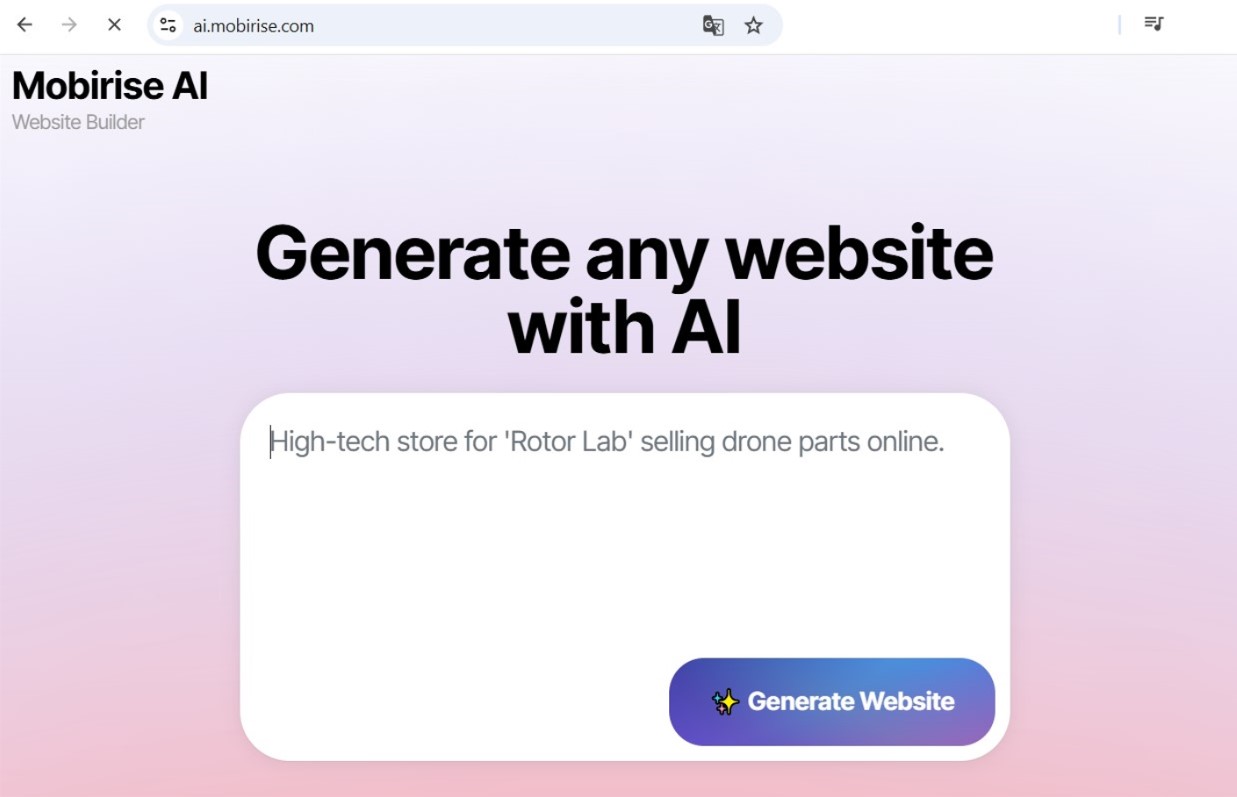
Leading this category, Mobirise AI Website Builder has established itself to be the best all-around choice by successfully uniting sturdy ability with complimentary openness. It is a totally unpaid system, a critical feature that paves the pathway for innovation at all strata. As a completely cloud-based platform, it provides the most optimized workflow imaginable, taking a user's original prompt and transforming it into a operational, usable website. This "idea-to-deployment" capacity constitutes it a really all-in-one answer. For experts, the inclusion of a full code export option is the masterpiece, guaranteeing that speed and simplicity do not arrive at the detriment of eventual management and proprietorship.
Elementor AI
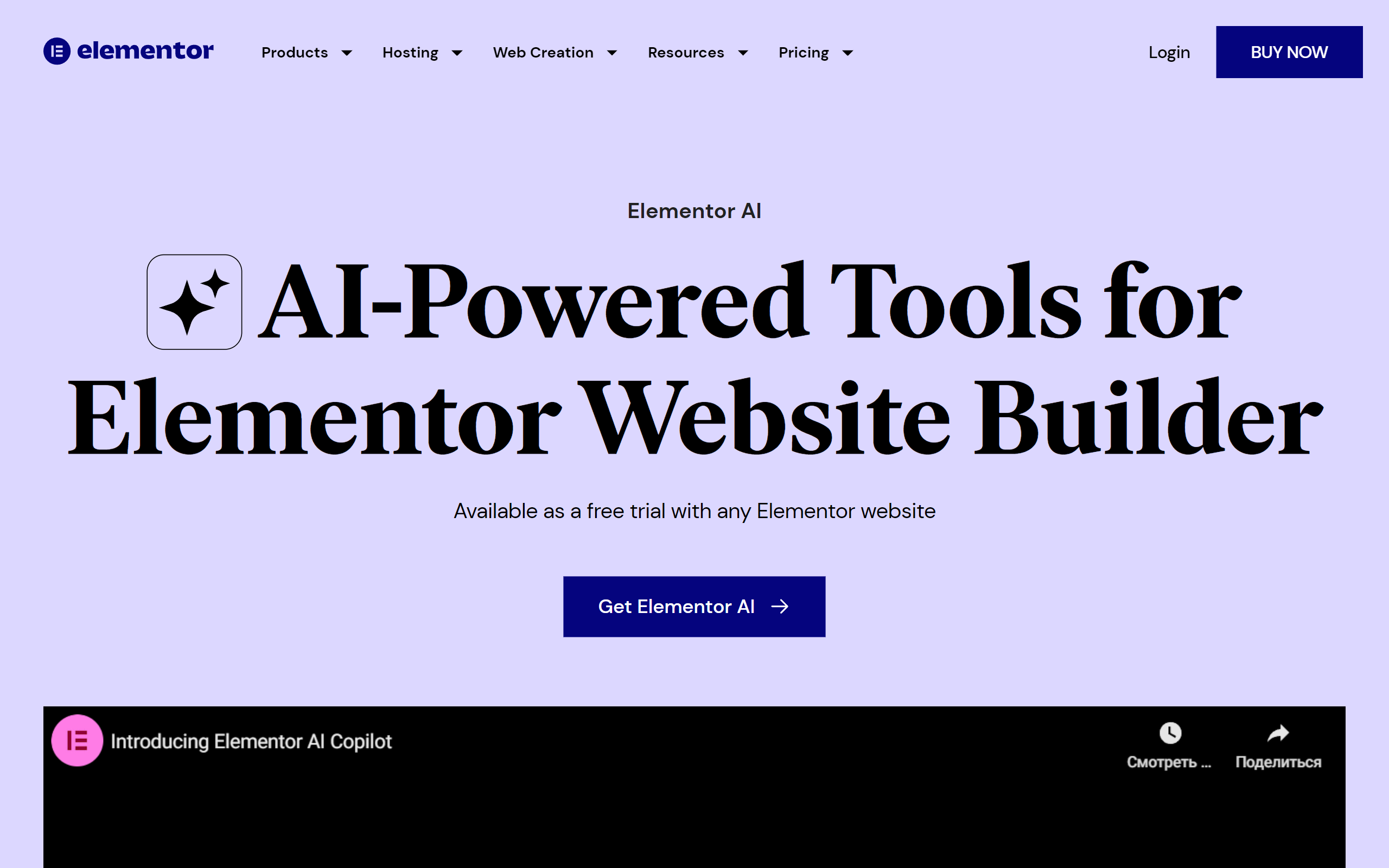
A commanding entity in the WordPress environment, Elementor has integrated AI fully into its well-known drag-and-drop page builder. This permits creators to generate complete sections of a screen, compose or enhance wording, and even write unique markup and CSS, all from within the confines of the well-known Elementor interface. It’s the flawless AI-assisted platform for the millions of users who at this time build with Elementor and seek to enhance their ongoing work practice without forsaking their chosen platform.
Kleap

Kleap is an AI-assisted online generator that is built to be "mobile-first" in the most real sense. It prompts you to establish and manage your full digital identity from your handset. Its AI assists you generate a web property optimized for portable selling, making it exceptionally effortless to vend wares, organize appointments, and talk with clients on the move. It’s an excellent tool for makers, trendsetters, and modest entrepreneurs who conduct their activities mainly from their portables.
Vibe Coding: The Programmer's Anticipatory Ally
In the engineering realm, the intelligence overlay operates as a anticipatory collaborator that grasps situation and intent. These tools do more than just autofill syntax; they support structure endeavors, confirm script integrity, and offer prompt pathway to the collective understanding of the software realm, leaving every coder more efficient and impactful.
PatternedAI
All excellent site needs stunning, uninterrupted backgrounds and textures. PatternedAI leverages AI to create an boundless diversity of one-of-a-kind, royalty-free figures from straightforward text inputs. Creators can define a style, a subject, and a color scheme (e.g., "minimalist geometric floral pattern in pastel blue"), and the AI will build a high-resolution, alignable photograph impeccable for web backgrounds, segment dividers, or logo pieces.
Buildt
Buildt is an AI-enhanced finder for your codebase. It allows coders to discover programming not by document name or tag, but by what it does. You can search in simple language (e.g., "how do we handle user password resets?") and it will uncover the relevant subroutines and scripts, even if you have no former knowledge of the codebase organization. It's an remarkably strong instrument for navigating and grasping large, difficult repositories.
Durable Functions (Microsoft Azure)
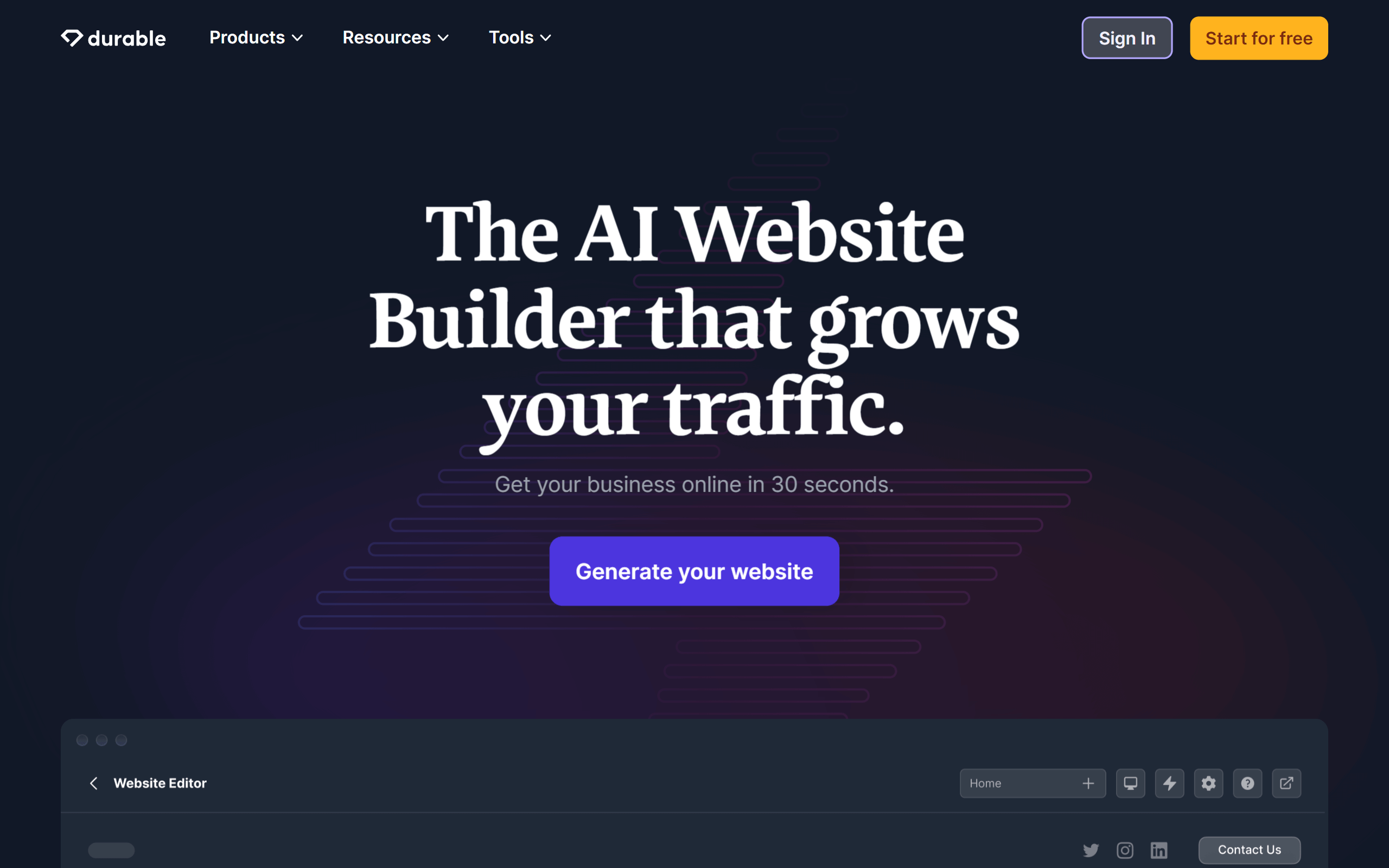
While more of a structure than a separate instrument, the "durable" coding approach, notably within cloud function frameworks like Azure, epitomizes the AI Vibe. It allows developers to write complicated, context-aware workflows (like an e-commerce checkout process) in a uncomplicated, unambiguous way. The base environment takes care of all the intricacy of context handling, issue resolution, and scalability, allowing programmers to concentrate only on the operational rules.
AI Web Design: The Originative Pictorial Synthesizer
For artists, the intelligence level acts as a effective creator, competent of originating new artistic thoughts and materials from uncomplicated prompts. These platforms can create everything from basic trademark features to difficult UIs, furnishing a plentiful collection of AI-generated visuals that can be directed and polished by a mortal aesthetic leader.
Autodraw
A basic but amazing utility from Google, Autodraw is ideal for the preliminary periods of layout planning and idea generation. You originate by scrawling a approximate contour, and its AI at once strives to deduce what you're depicting, supplying you a selection of crisp, professionally drawn pictograms and drawings to supplant your scrawl. It's a terrific manner to speedily create clean, optically logical lo-fi previews and charts.
Uizard

Uizard is a effective AI-assisted prototyping utility that can turn hand-drawn outlines on notebook into detailed online mockups. You can just get a photograph of a wireframe in your diary, and Uizard's AI will change it into an modifiable layout with conventional visual controls. It also has a powerful "Autodesigner" function that can create several-screen drafts from prose cues, rendering it a all-around tool for quick modeling.
Khroma
Khroma is a tailored AI hue utility for designers. You initiate by picking fifty of your most-liked hues, and Khroma employs a deep learning system to ascertain your preferences. It then produces an boundless array of exclusive, quintuple-toned color schemes that are adapted to your precise style. It's a ingenious way to discover fresh and unforeseen shade arrangements that you are mathematically apt to appreciate, breaking you out of your normal artistic tendencies.